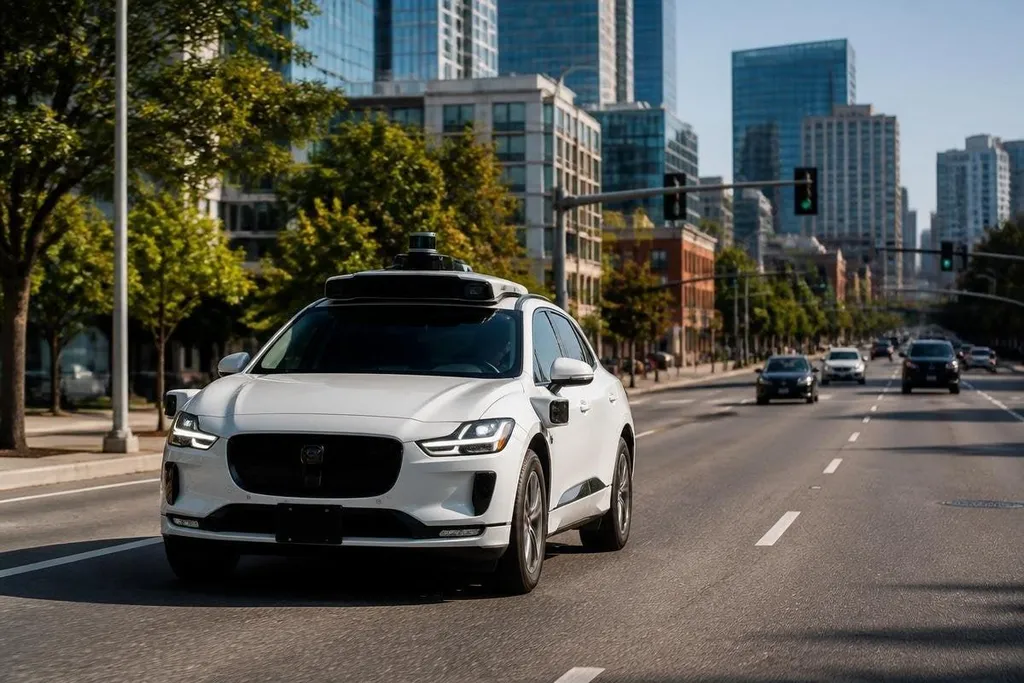
An autonomous vehicle must turn camera images, LiDAR points, map data, and motion readings into safe driving actions. AI handles that work by finding objects, reading road scenes, predicting movement, and choosing what the vehicle should do next.
This affects more than the steering system. It also changes how vehicles are trained, checked, updated, and supervised.
Quick read
- AI turns raw sensor data into a view of nearby traffic, road edges, and open space.
- Prediction software estimates how cars, cyclists, and people may move next.
- Human checks, simulation, and clear limits still matter when the road differs from training data.
How the vehicle reads the road
A self-driving system starts with sensors. Cameras record color and shape. LiDAR measures distance with light pulses. Radar detects objects and their movement, including in conditions where cameras may struggle.
AI models combine these inputs into a scene description. The vehicle may label a traffic light, locate a lane boundary, estimate the distance to a car, and mark a clear path. This process is called perception, and it runs again as the vehicle moves.
The useful change is speed and flexibility. A fixed rule might look for one known shape, while a trained model can compare new images with patterns it has seen during training. That still leaves a hard limit: an unusual object or rare road layout may not match those patterns well.
Prediction comes before movement
Finding a person near the road is only the first task. The vehicle also needs to estimate what that person may do next. A person near a crossing might wait, step forward, or turn away. Each choice changes the safe path.
Prediction models use recent movement, road position, traffic signals, and nearby objects to estimate possible actions. Planning software then weighs those estimates against road rules, the vehicle's speed, and the space around it.
The steering command comes last. That order matters because a vehicle can identify an object correctly and still make a poor choice about its next movement.
AI links perception, prediction, and planning in one control system, but the result still needs checks at every stage.
Training changes the vehicle before sale
AI software learns from recorded driving data and simulated scenes. Engineers can test lane changes, blocked roads, poor visibility, and objects placed in unusual positions without sending a vehicle into each case on public roads.
Simulation creates repeatable tests. The same road scene can run again after a software change, so engineers can check whether a fix created a new fault elsewhere. Data from vehicles in operation can also point to cases that need more testing, subject to the maker's data rules and local law.
A short driving video can hide the cases that decide whether an autonomous vehicle is safe to use. Autonomous vehicle reporting from Robot24.com can tie a claim to the test route, weather, sensor setup, and human control. That record gives you a clear way to judge the limits in the next section.
Where AI still needs limits
AI does not remove the need for maps, sensor checks, braking controls, or human oversight. A model can be confident and still be wrong. Weather, road works, faded markings, glare, and blocked views can change the input before the vehicle makes its choice.
The main open issue is not whether a model can drive through a clean test route. It is how the full system behaves when several problems arrive together. A blocked lane, a wet camera, and an unclear road sign create a harder test than any one issue alone.
I'd be cautious about any claim that describes AI as a replacement for the whole driving system. It is a part of the system, and its value depends on sensor quality, control rules, testing, and the conditions allowed by the vehicle's operating design.
A practical check before you trust the claim
Use this list when a maker says AI makes its vehicle autonomous:
- Name the task: Check whether the claim covers lane keeping, highway driving, parking, delivery routes, or another defined job.
- Check supervision: Find out when a person must watch the road and how the vehicle asks for help.
- Ask about conditions: Look for limits covering weather, road markings, speed, maps, and construction zones.
- Separate demo from service: A controlled demonstration does not show how the system behaves across normal use.
- Find the update plan: Ask how software changes are tested, approved, and sent to vehicles.
The next useful measure is not a larger AI model by itself. It is a clear record of where the vehicle works, where it stops, and how often a person must take control. Until makers publish that record in detail, treat autonomy as a defined operating range rather than a promise about every road.